
15th April 2014
Garry Heath: Canary Wharf Ten Years On
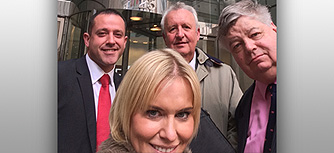
It has been ten years since I visited the regulator’s Canary Wharf HQ. Last time I went to discuss the impact of TCF on the activities of bancassurers who were selling seriously overpriced life assurance to non-standard bank customers. I met a couple of women dressed in Islington grunge who had great difficulty in understanding the difference between a standard life and a non-standard one. Once these two Rita’s had been educated; it became clear that Treating Customers Fairly didn’t really apply to banks and if they were stiffing their clients; it wasn’t anything a self respecting FSA person would do anything about. Mumble, mumble swerve - thanks for coming!
Same building ten years on and thanks to being one of the speakers at Panacea’s January RDR conference, I am part of the team discussing both that conference and Panacea’s latest survey on the effects of the forthcoming removal of trail commission. To be fair to the current FCA team; we were greeted warmly by well informed people and a very business-like meeting ensued. We put our points and they were decently received.
So what are my after-meeting thoughts?
Firstly, how well served the IFA community is by Panacea. A free to use adviser community website and resource that makes surveying meaningful and is willing to create industry discussion through their ‘Bento’ email bulletins and its various meetings. In particular, it has become the area through which many directly authorised businesses can express their opinion. In many ways it is performing the functions of a trade association without being one. I will return to that theme in a minute.
Secondly, I felt that we were filling a real void in the sector’s representation. In the meeting it was clear some of our contributions were fresh information to the FCA and that what may have initially been perceived as a chore of a meeting for them became somewhat more valuable as the meeting progressed. In some ways, I started to feel sorry for them. I wonder when they were last confronted by the clearly expressed reality that lies behind their ideas.
If the industry is to embark on healthy discussion and the regulator is to consult properly; there has to be an open exchange on the battlefield of ideas. This is more than the trading of platitudes or attempting to tinker at the margins. Each stakeholder must arrive with clear information, clearly expressed. Each stakeholder must have the right to instigate policy initiatives which cannot be the sole prerogative of the regulator.
Part of the process has to be meaningful push back if we are to avoid the regulators reversing themselves down policy cul-de-sacs like RDR. Without push back there is no discipline on the battlefield of ideas. The totally ridiculous becomes fact and the indefensible becomes acceptable. Par-boiled policies are launched by an over mighty regulator confident that it will not face a concerted challenge. This way leads to the abuse of power by an Orwellian super class.
This is where we are and it demonstrably not working for anyone; particularly the clients who are paying for a dysfunctional process which does not listen but treats them as cattle in social engineering experiment.
If we are to change the current system we must return to an interchange of ideas based on principles not short term expediency. Principles like value for money, openness, clarity, parliamentary oversight and the rule of law. Once we return to principle the industry can start representing itself from the position of strength and from the IFAs perspective as the agent of the client from the moral high ground.
From a principled position you can ask questions like – “OK Mr Regulator let’s look at your RDR ideas - Please explain to the public how culling 25% of the adviser force and separating at least 5m clients from their adviser will improve their lot!” or “could you explain to my granny the difference between Independent and Restricted advice”. Such an approach might start to bring regulation back to real people and real issues.
Under New Labour, the FSA became an organ for social engineering attempting to create a perfect socialist market for financial services products. It was far more interested in its own ethnic diversity than protecting clients and avoided bringing in anyone with industry experience to “avoid having our thinking polluted” as one FSA officer told me. To be fair to the FCA, whilst much of what has happened appears to be a rebranding exercise, we are seeing some ex-industry people coming into the regulator – let’s hope for some pollution before they go native.
Also I sense the FCA’s increasing uneasiness about creating policy in a vacuum and whilst they inherited a pendulum solidly swung in their favour they realise it is going to swing back. When that happens they will not want to be exposed.
The world of “Group Think” – large government, the EU, the BBC and nothing moves unless a regulator says so is going to go – probably with the self-appointed political class that inspired it. Whether it’s UKIP in the UK, the Tea Party in the US or any number of similar group in Europe we are heading for a paradigm shift of power back to the individual.
Sants at the Treasury Select Committee will prove to be the turning point. MPs have neither forgotten or forgiven and whilst the current coalition will not be revisiting regulation in this Parliament; there will be legislation post 2015 if IFAs get back to lobbying their MPs.
So where does all this leave IFA representation? APFA presents itself as representing all Independent and Restricted advisers. The reality is that the vast majority of its membership and income comes from networks who are financially weak and whose existence is totally reliant on the whim of their provider owners. Are the commercial interests on Networks always aligned to DA IFAs? I don’t think so – quite the reverse.
I understand that APFA only has 100 of the 3,100 directly authorised UK IFA firms - a whole 3% of that group. At the January Panacea conference; I suggested that, with the demise of the Cardy initiative, IFAs should join APFA – not from any great enthusiasm for the organisation but on the basis that it was the only game in town.
Just after the conference I was told that APFA was having an “away day” and so I volunteered to attend and offer them my experience free of charge. Given that IFAA had 75% of the DA advisers and APFA has 3% you might think should an offer might be welcomed. Not so. Thanks but no thanks – Pity!
So is APFA salvageable? – I doubt it. IFAs are currently represented by an organisation that principally represents a dying commercial model. It denies itself access to many of the tactics that have worked in the past and doesn’t really want DA members. What happens when the network movement fails? IFAs will not have any voice. It is time to start planning for that eventuality.
So how should the IFA sector represent itself? Firstly we should recognise our weaknesses and strengths. Our major weakness is that the sector does not have the establishment contacts or the clout that banks and product providers have in terms of closing sites in particular cities. It cannot offer regulators, MPs or civil servants post retirement jobs. Pretending that AIFA/APFA will succeed by playing the establishment game is risible. The results speak for themselves.
We have to return to playing to our strength. The IFA sector is diverse and spread across nearly every constituency. IFAs talk for a living, explaining quite complex concepts simply to clients. They are ideal creatures to canvass MPs in Parliament and in their surgeries.
When IFAA did its negotiating with the Treasury and with regulators; it did so from a position of strength with the active support of its members, their MPs, the consumer lobby and often the media. This consortium delivered a different form of representation in which we avoided special pleading by aligning ourselves with our clients. Whitehall and its vested interests hated it but so what – welcome to active democracy!
In 1999 when IFAA was attacked by the ABI and Patricia Hewitt; I had run 60 hour weeks for 10 years, driven 35,000 miles each year and I was getting tired and exhausted. Confronted by the combined Treasury and ABI; I decided that it was more important to have a united IFA sector under one body than for a sector to fight New Labour divided. In retrospect, it was the wrong decision not just for the IFAs but far more importantly for their clients. I handed the IFA sector to people who didn’t deserve to represent it – Something I have regretted every day since.
I should have gathered my troops and put them to the sword. Had I done so we might still have polarisation, an accountable regulator, a sensible ombudsman scheme and at least 30,000 more jobs in the Independent sector – Oh and at least 5m more clients with access to advice they could afford.
So where do we go next? Panacea is excellent position either to become a new body or at least sponsor the creation of one. It has already done more on the Trail Commission issue than anyone else – why not go the whole hog? OK Panacea’s original plan did not include being a trade association but things change. I have asked Derek and his Team to give it real thought.
Otherwise it is time to set up a new body. If it can attract 75% of the DA businesses it would have a budget of £1.5m significantly more than APFA. It can be done with a bit of leadership a load of support and most importantly - it is time to do it.
Garry Heath
Comments (15)
The newly constituted APFA is seen a new creature, a phoenix rising from the ashes of past defeats. Indeed, it may be that APFA can make a difference and can bite as well as bark.
For many the jury is still out and as a council member I include myself as one of the jurors.
In past incarnations the council was a rubber stamp for the political and personal ambitions of its leaders and APFA has promised to restore the process whereby the executive puts into place the requirements of the council.
Thus far it seems that little has changed and council members hear about APFA policy via the medium of newspaper article and online columns.
For APFA to make a difference and attract those non-network members that it needs in order to be truly representative it will need to shed its old habits and stop playing civil servant to the councils Minister.
Alan Lakey 17/04/2014 09:30
Unless and until the occupiers of office in a representative body have the necessary knowledge, attitude and will to fight where necessary they will fail- lets not forget that in the main, they do not currently get invited to the high table much less have input that the regulator remotely takes any notice of other than playing them like a 'patsie' and patting them on the head !!!
Derek Gair 17/04/2014 10:00
Frank Dennis 17/04/2014 11:54
Julian Stevens 17/04/2014 12:05
My main aim was to make the regulator accountable in terms of the effects of its regulation on the nation’s savings, protection and pension investment habits – quite simply all regulatory rules / actions should be measured against those key areas and if it makes any of them worse it should be scrapped or not proceed. I now realise that I need political backing to succeed in that respect because the regulator is very happy with the status quo (who would take on such accountability willingly if they could get away with not doing so?!). I do not have the political clout to get in front of the right people in pursuit of my aim so I’m throwing in the towel. I have achieved so little in my 3 years on the SBPP that it is not a good use of my time but believe me I have tried to fight the corner of the beleaguered IFA. I remember this industry when it was fun to be in! Regulation has succeeded in turning it into a shear bloody grind yet the consumer has never needed us more. Perhaps I’m just too old and remember much better days!
Richard Carne 17/04/2014 15:07
Bless your heart!
“Are the commercial interests on Networks always aligned to DA IFAs? I don’t think so – quite the reverse” I have been saying this for years and was severely slapped down when on the Council if I ever dared to raise the issue (Which I did on several occasions). Indeed Networks per se have done no favours to the wider reputation of financial advisers or their standing and perception with the Regulator of the day.
However as to the rest – I class it as daydreaming. Advisers and especially IFAs are a disparate group getting them in one organisation is (excuse the pun) like herding cats.
Anyway I think you may have missed the point regarding APFA. I realise that they are regarded as a body to fight for the perceived wrongs and injustices foisted on us by an unaccountable and uncaring regulator. But that is the attitude of Canute. Debating or arguing with Civil Servants has never been a productive occupation. Where we fail is in providing feedback and in so doing actually do some of the job for them. What we had in bygone eras (not only in Financial Services) was that the bureaucrats made the rules – which were plain, set down and unequivocal, and the entrepreneurs found ways to accommodate and steer a path. Now we have an amorphous jelly which we the regulated aid and abet.
For me where the value of APFA resides is in the fact that they clarify, explain and précis the prodigious output from Canary Wharf. That is worth a fee – but not three times what a Network member pays.
The sensible way forward in my view is to have the Professional bodies take a more proactive role. With the advent of SPS we all have to join a professional body – so critical mass is not an issue. Logically APFA should be taken over by one. Preferably not the CII – IFP would be my favourite.
Harry Katz 17/04/2014 15:09
My firm is a member of BIBA. That organisation looks after me well. I don't always get what I want, but overall it is excellent value for money, delivered by a driven and knowledgeable team.
Most important they don't have open in-fighting, so they don't appear as a disparate group.
They are listened to and heeded by Parliament, the press, the civil service and the regulator.
AIFA/APFA has never in my view had that cache, nor has it deserved my time or money.
Perhaps we should all ask BIBA to go back to its previous incarnation and serve IFAs as well.
Richard Brown 17/04/2014 15:10
Richard Brown 17/04/2014 15:12
Sarah Paul 17/04/2014 15:14
As with most of the above posts I agree with just about all of them. However, as far as APFA is concerned the problem is (apart from 1 exception that I will not name), people who generally get involved in such organisations such as Smee, Goddard, Cummings, Gay are political animals. And it's funny, even when one comes from a background which may be perceived as the right person, they also can become politicised as I have noticed in one case! So there is no hope as the minority of good potential representatives for advisers are up against the majority of the political cesspit.
The only way is to change things is to make real CHANGE. The regulators and all regulatory staff should be personally fully accountable for the actions, just like the businesses and individuals they regulate. Maybe, the recent letter from Osborne to the FCA asking serious questions about the FCA's actions may be the beginning of the end, or perhaps not.
As far as Panacea is concerned, having the audience of many subscription free advisers is good, but ask most of them to part with a fee, I think you will see them flee. Most advisers are not wealthy people and earn less than an IT consultant. I would be up for a compulsion of payment like a union, dare I say it. The BBC do it!
Mystery Shopper for IFAs 17/04/2014 15:18
Advisers, like electorates, get the representation they deserve and in this case, given my understanding of the numbers, engagement and lack of a visible sign of fighting to protect members interests, I can readily see why something needs to happen.
Frankly, I am a bit too old and a bit too cynical to consider picking up the baton, but I do feel it important to help advisers and those who represent them as best I can.
In this case, advisers need to decide what they want from a trade body, they should ask if the current representation is doing what is best for them and if not (in a democratic way) make sure that the majority interests are best served.
From what I hear, this is not happening as it should.
The solution?
Well, if Garry is looking at a return to the fray, advisers would do well to listen. Trade bodies, like trade unions are a numbers game. You need money to run a successful and professional organisation. Think BALPA rather than ASLEF for our industry style model.
When planes stop flying the issues in dispute are listened to and almost always the pilots win. Arguments are built around safety. With IFA’s the arguments are the same in many ways- it is about the safety of consumer financial interests and planning for their future needs.
So, if APFA will not do the job the way their members want, then it is down to advisers to find a new way. That will take money, resolve and above all time as the damage that has been done to the industry by way of loss of confidence, loss of livelihood and loss of direction will take some time to put right.
The IFA centre failed, Adviser Alliance failed and really because of an unwillingness to pay for something that could really make a difference. That mindset, aided by APFA and AIFA inaction and indifference to try another, possibly more confrontational way is now the very thing that protects APFA.
We at Panacea are here to help whoever fills that gap. But be under no illusions, advisers need to be 100% together and all pay the dues.
Derek Bradley 17/04/2014 15:20
As far as the other comments; firstly thank you for the kindness expressed. What is clear is that unless a contrary view is expressed we will see the regulator's review of RDR as a bid for yet more power.
As I suggest in the article unless contrary research is done and expressed we might as well abandon the less wealthy clients to the banks or self advice and get on with servicing 100 wealthy clients each.
There is no doubt that there is gold in that approach however I may be naïve in believing that Independent Advice was always more than giving a service to the rich. It was to advise as many as possible and have a real influence in the distribution of saving and protection in the UK.
At the end of April I will be launching a new piece of research in and around RDR and its effects on clients.
I will need IFAs to give me:
Access to their businesses so I can (a)compare and contrast what Clients have previously expected and what they are getting now (b) look at the relative preparedness of advisers for the changes that will come to Trail commission
A small number of clients willing to be interviewed
Finally funds to do it properly
Perhaps we start with a single project and then move on to a wider horizon if the support is there
Kindest
Garry
Garry Heath 17/04/2014 15:49
It is an absolute pleasure to read the considered points above, and I find myslef in complete agreement with it all. Thank you for that breath of fresh air.
Dick Carne (Richard) and I have already had a conversation about his departure from the SBPP, and I am thrilled to have my name put forward.
Obviously there are others who are being put forward as well, but may I say that if I am afforded that opportunity, I would like to create a discussion group of IFAs through Panacea, who can meet regualarly, and who can then feed their ideas and opinions into the FCA through my representation.
After all, public servants love committees, and perhaps we should have one of our own.
Warmest to all
Trevor
Trevor Harrington 17/04/2014 16:18
Also to know that Harry K is still kicking
Clive Steggel 25/04/2014 12:25
Yup still breathing and as grumpy as ever!
Thanks!
Harry Katz 28/04/2014 18:45
You need to be logged in to comment on this article